
For years, Saadia Mosbah has been one of the leading voices against anti-Black racism in Tunisia. As president of the anti-racism organisation Mnemty, she has stood up for Black Tunisians and Black migrants alike. When violence against Black migrants escalated after President Kais Saied’s February 2023 statement against African migrants, she became a target of online hate campaigns.
On May 6, 2024, she was arrested. On March 19, 2026, she was sentenced to eight years in prison and a heavy fine on charges of money laundering and illicit enrichment. On June 23, the Tunis Court of Appeals upheld her conviction, along with those of five Mnemty colleagues and associates. A final appeal, filed on June 29, is now before the Court of Cassation.
Human rights movements and organisations, including Amnesty International, have denounced the irregularities in the proceedings and the lack of evidence for the alleged offences. They have also raised the alarm over the racist treatment and violence Saadia has reportedly suffered in detention.
But Saadia is more than a case file. Below, three activists tell their stories of the woman they know and the movement she helped build. Read them, then join the call for her immediate and unconditional release and for the convictions to be overturned. Keep fighting for those who fight for us in an anti-Black world.
Saadia’s Imprisonment Inseparable from Criminalisation of Black Organising and Solidarity
I first met Saadia Mosbah shortly after the 2011 Tunisian Revolution, when she was active in feminist organisations. Over the years that followed, I witnessed her unwavering commitment to the struggle for Black dignity, justice, and liberation in Tunisia. I watched her organisation, Mnemty, grow. And I watched a dream grow alongside it: the dream of a Tunisia where racism would no longer be denied, normalised, or left unpunished.
A Tunisia with a law explicitly criminalising racial discrimination. Saadia was determined to bring together as many voices as possible around this struggle. She openly confronted a reality that many preferred to ignore: a significant part of Tunisia’s supposedly progressive and activist civil society remained silent on racism. Even within movements claiming to fight for equality and justice, Black people were too often expected to fight their battles alone.
Saadia refused that silence. She refused to make racism a secondary issue, or to soften her political demands to make others more comfortable.
But through years of persistence, political courage, and collective organising, she helped build a movement strong enough to achieve a historic victory: the adoption of Tunisia’s law against racial discrimination in 2018.
Years later, in 2023, I had the privilege and honour of working alongside Saadia to organise a march against state racism. Following the Tunisian presidency’s disgraceful statement targeting sub-Saharan African migrants, she was there, standing with us on the anti-fascist front line, organising, mobilising, supporting, and defending Black people and migrants in Tunisia. Saadia knew the risks. She understood what it meant to confront state racism in an increasingly authoritarian political climate. Yet she refused to retreat.
Today, Saadia est en prison. Her imprisonment is inseparable from the criminalisation of Black political organising, anti-racist resistance, and solidarity with migrants.
Saadia’s story is also a reminder that political victories are never irreversible.
A law can be adopted while the structures of domination it was meant to challenge remain intact. Rights written into legislation mean little when those who fought for them are deprived of their freedom.
But Saadia’s struggle is bigger than her imprisonment. It belongs to a history of Black feminist resistance, of people who refused invisibility, challenged nationalist myths, and insisted that liberation cannot be selective.
We owe Saadia more than admiration. We owe her solidarity, political memory, and a continued commitment to the struggle she has carried for so many years.
Freedom for Saadia Mosbah!
Henda Chennaoui is a feminist based in Tunis. In her career as a journalist, Chennaoui has followed social movements and written about different struggles of women and young people from disadvantaged backgrounds.
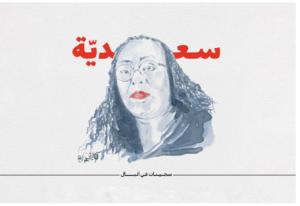
To the Beat of the Stambeli: A “Nouba—Trance” of Solidarity and Resistance with Saadia Mosbah
There are women whose commitment transcends their own personal stories. Saadia Mosbah is one of them.
An anti-racism activist and founder of the Mnemty association, she has dedicated her life to amplifying the voices of Black people in Tunisia, denouncing discrimination, and breaking down the wall of denial surrounding racism. She has helped transform struggles that were long overlooked into issues of justice, citizenship, and collective responsibility.
Her commitment is part of a long history—that of Black women who, generation after generation, have resisted slavery, racism, segregation, and all forms of domination. They have never been mere witnesses to history: they have been its protagonists, carrying the voices, memories, and struggles that others sought to erase.
Saadia has turned this legacy into a collective responsibility. She has emphasized that the fight against racism does not concern only those who experience it, but is a responsibility for society as a whole. She has also stressed that citizenship cannot be full and complete if it remains conditioned by skin color, origin, or appearance.
Today, this woman—an activist and a vital voice in the fight against racism—is deprived of her freedom.
But Saadia cannot be reduced to her legal case, nor can her story be reduced to her imprisonment. She is a woman, a mother, a friend, a comrade. She is also a voice that has helped bring to light a memory and a history that have been marginalized for far too long.
We want to remember what she has built, the doors she has opened, the consciences she has awakened, and the solidarity she has fostered. We want her name to remain associated with this struggle for a Tunisia where no one should have to justify their presence, their identity, or their humanity.
In the Stambeli, the sounds of the guembri – traditional lute, the chkacheks – small metal percussion – metallic rattles and the dancers’ bodies come together in a “nouba-trance”. This art form carries the memory of slavery and uprooting, but also the strength of resistance and solidarity. Pain is never left to stand alone.
In this symbolic celebration, we want to make room for Saadia. Not to ask her to be strong again, to shoulder even more, or to become the sole symbol of a cause, but to tell her that she is not alone. That what she stood for now belongs to all of us. That the fight against racism cannot rest on the shoulders of those who suffer its violence.
Standing in solidarity with Saadia means refusing to let her be forgotten.
Saadia, we owe you more than a tribute. We owe it to you to carry on what you helped bring to light: a living memory, free speech, and a collective struggle for equality and justice.
May this nouba be a celebration of our solidarity, our loyalty, and our resistance.
May the rhythms of the Stambeli carry our voices, our affection, and our determination to you.
For no prison should be able to lock away a memory, silence a story, or confiscate a collective struggle.
Freedom for Saadia Mosbah. Justice for Saadia and her comrades at Mnemty. And long live the struggle against racism, in Tunisia and everywhere else.
Samar Shaiek, a feminist activist and campaigns and advocacy coordinator at Amnesty International Tunisia.
Wiem Pousse is a human rights defender and the Director of Amnesty International Tunisia. Amid the first waves of arrests of opponents and civil society actors in Tunisia in 2023, she joined Amnesty to put her experience at the service of defending human rights and protecting civic space.