I was just 17 years old, in a WhatsApp group with peers discussing sexual and gender-based violence when I first heard that Female Genital Mutilation (FGM) was violence. I remember being agitated by the turn the discussion took. Though much of that conversation is murky now, I remember repeating the same lines: ‘FGM is culture; if we can advocate for abortion, then surely we could allow others to practise their culture in peace’. A colleague then insinuated that such statements were why more girls and women were being harmed – that I was, in fact, supporting violence against women and girls.
Teenage me had just started her activism journey, but carried the authority of someone who thought she knew it all. For her, FGM was a normal part of existence. My mother, aunties, cousins and almost every woman I knew had gone through it. I had heard stories of older women travelling for days to be cut. Being cut was an honour. Families paid the woman who performed the cutting. There was no way, teenage me would think, that love and violence could coexist. So being called a perpetrator on that platform did not sit well with her.
I left pressed to prove someone wrong. I decided to learn more about FGM, hoping to win the next argument. I dove into its history, beyond what I had absorbed socially.
Why were women cut? How had it become part of our history? As I travelled from one district to another, I heard stories about female chiefs, hints from the Sunnah, and other explanations. Whatever argument I would make next had to be concise. It had to convince others – and, by this point, myself – that FGM was not violence.
But the more I learned and met the women in different locations, the more my need to prove a point faded. The research kept returning me to the same message: FGM is violence. Teenage me found stories of women discovering they had been cut as children. Older sisters fighting to protect younger sisters. Communities and countries organising against the practice. Women whose genitalia had been sewn together until marriage. Girls being forced into marriages, with FGM part of a much larger system of control over their bodies and futures.
And somewhere in that search, she had to confront a question she had never thought to ask: what if something could be culture and still be violent? The more she learnt, the more she was shattered by the harm done to her own body, and to the bodies of millions of girls before her.
Facing the fear of naming as a survivor
FGM was the first issue I was ever truly scared to write about. There have always been stories of women being kidnapped, physically assaulted, and even killed for advocating against FGM. And the women who sold dresses, the men who sponsored the cutting, these were people I had loved and admired all my life. Talking negatively about a practice they held dear felt like a betrayal of their trust. And, to be honest, I also thought ”I am okay for now. So, what I experienced was not great harm, right?”
Then one day, on a trip travelling back from Waterloo, eastern…Sierra Leone, I saw girls as young as six walking along the streets. Something shifted in me. Suddenly, this was no longer a debate about culture, history or what I had been taught to believe. These were children. Girls who, like me, had yet to understand the lifelong implications of what could be done to their bodies. If I remained silent, this violence would continue to be meted out upon young girls and women across the country.
I went straight to Facebook and wrote, “I’m a cut woman; I once believed that this was an African thing. It never was”, and there I named t the harm that FGM is. I was surprised by how many people agreed with me. Of course, some people told me to stop. Was it the first time to publicly say that? And really, to look at this as a personal experience that connected to millions of other girls and women, and it needed to be named. Not faceless statistics.
Since then, I have kept writing. I kept sharing my story and other advocacy work across social media platforms. The first post opened a conversation with my cousin, who had also been cut. We talked about the harm and absurdity of it and promised that our daughters, if we had them, would not be subjected to the same harm.
The bravery to speak about FGM online, and the conversations it sparked, has stayed with me, and it has changed how I have come to understand survivor testimony—survivors as everyday people who have lived through harm and survived it first-hand.
For many of us, going through FGM was not a choice; it was family enacting culture. It was what we knew and what we were taught to accept. But knowing what we know now, we had to speak up. When I wrote that Facebook post, I was also, for the first time, claiming my place among those survivors who were saying that this violence must end with them.
Tackling socialisation and policy on social media
For decades, the global movement to end FGM has relied heavily on data what the numbers say. Prevalence rates. Health complications. Economic costs. All of these are real, and they matter greatly. But they are only one part of the story, and alone, rarely change the social meaning of a practice. But survivor testimonies like mine do things differently. They take something made normal and challenge us to see it differently. Survivor testimony is not new to the movement. It has long been one of the strongest forms of community-level resistance. What has changed is its reach, organisation and power.
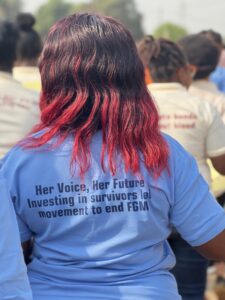
Across Africa, survivors like me are increasingly moving from the margins into positions where policy is made, and we can shape it. And through social media, we have seen the rise of the “anti-FGM influencer” as part of this shift. More survivors are sharing their experiences on their platforms to help end the practice. Through first-person storytelling on social media, as well as music and documentary film, we are amplifying work that has been happening in communities for generations, while placing FGM more directly within conversations about bodily autonomy, violence, child abuse and patriarchal control. Gambian women and girls for the last two years have been fighting efforts to overturn the FGM ban, a fight now before the Supreme Court.
Social media has also brought us collaborators and partners in the fight against FGM. It has disrupted the distance between individual testimony and collective action. A woman in Dakar can reach a girl in Conakry. A campaign launched in Freetown can be amplified by a diaspora in London, Oslo and Minneapolis within hours. A survivor can tell her story and, within the same space, find another woman who recognises it, an organisation willing to support her, or thousands of people willing to act with her.
Testimonies like that of Shamsa Araweelo similarly reached millions online, prompting outrage, solidarity and recognition among women who had experienced FGM themselves. Social media has changed not simply who can speak, but who can find each other. Survivors who once told their stories in isolation to researchers, journalists or therapists can now recognise one another, build communities and organise together.
Disrupt economies and knowledge systems
This also matters for how knowledge is produced. For too long, survivors have been treated as data sources rather than authorities on their own experiences. Testimony disrupts that hierarchy. It names what statistics cannot: the particular betrayal of being harmed by someone who also raised you, fed you and loved you. It forces us to hold several truths at once: a community can love you deeply, and the same community can participate in practices that harm you. In the end, one must choose to protect generations of girls who are being born every day.
Survivors persist in this work, knowing there are real, often imminent risks, both in the community and online. Those of us who speak publicly can face ostracism, family fractures, harassment and physical threats. In places where religious leaders, political actors and organised anti-rights movements are working to reverse protections, the cost of testimony can be high. We need to disrupt economies that have for generations been constructed around the practice of FGM. FGM sits at the intersection of economic, social, and political power. Challenging the practice itself makes one a threat to the authority and systems that sustain it. Survivors can face grave backlash as a result. For some, speaking out means relocation; for others, it can even mean losing their lives. So safety work is important.
The movement has an obligation to protect the women who carry their stories forward.
I think about that 17-year-old girl sometimes. She was wrong about FGM, but she was not stupid. She was trying to make sense of a contradiction she had never been given the language to name: that the people who love us can also participate in systems that harm us, but also that culture is not an excuse to continue a harmful practice. Culture is not abstract; it serves everyone equally and can be reformed, disrupted, and dismantled so new ways of being can emerge, ways that advance dignity and freedom.
Being a survivor does not automatically mean knowing you are one. Today, survivors are naming that contradiction for ourselves. We are telling our own stories and changing what the world understands about FGM.
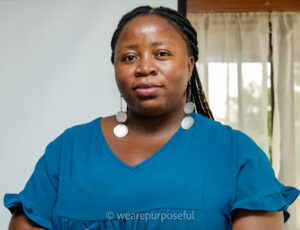 Massah Brockarie is a Sierra Leonean feminist and social entrepreneur. She has previously worked with Purposeful, and she’s a contributing poet to “Across Borders, Advancing Justice: The Transnational Movement to End FGM in West Africa”