How we enter, relate, build trust, and move resources within contemporary philanthropic structures is not abstract; it is deeply material. This is about power, proximity, and integrity, especially for African feminists who define ourselves as being close to the movements we serve. Who we are and how we show up are shaped by practices that have long understood the movement of resources as rooted in relationships, power, privilege, and duty. Relationships built over time, held in community, and sustained through commitment to one another.
As we centre relationships in our work, it is important to also reckon with how our own practices reproduce distance, hierarchy, and exclusion. Our relationships are shaped by systems of power and oppression, and by the privileges we hold within philanthropic ecosystems. These privileges influence whose knowledge we amplify, whose urgency we recognise, and whose work we resource within movement ecosystems. They are present in how proximity to funding, institutional language, and global networks have and continue to create new hierarchies among us. Privileges are present in how we unintentionally replicate the very exclusions we critique, particularly when we prioritise institutional comfort, compliance, or legibility over movement realities.
There is an urgency in the current political and funding landscape to address these persistent issues. And self-critique is necessary always, and much more needed today because across the continent, we are witnessing the rise of conservative and authoritarian movements and leaders that are actively rolling back commitments to gender justice, while simultaneously shrinking the resources available to sustain livelihoods.
Current Landscape
Funding for feminist organising, especially for movement-led work, continues to contract, often under the language of shifting priorities, risk management, or neutrality. In practice, this means that those already at the margins are being asked to do even more with less, to navigate increasing hostility, and to sustain livelihoods, care, and resistance in conditions of deepening constraint and violence. This is compounded by sharpened inequities in how resources flow, reinforcing patterns in which institutional actors are stabilised while movement-led organising becomes even more precarious.
At the same time, the NGO-isation of feminist work continues on the continent as movement organisers, implicitly or explicitly, are encouraged to adopt structures, languages, and practices that align with donor expectations. This shift comes at a cost, often distancing organisers from their communities and reshaping political agendas into project frameworks as NGO structures narrow the possibilities for how organising is imagined and sustained.
And these patterns and inequities are neither incidental nor limited to movement-led spaces. They are also present in African philanthropic spaces and in us as practitioners, shaping how we make decisions, whose work we trust, what we fund, and how we practice accountability. Decisions about who can access funding, what counts as legitimate work, and which organisational forms are considered “fundable” are rarely neutral. They are shaped by institutional histories and preferences that privilege formalised, NGO-structured entities over more fluid, movement-led organising. In this way, philanthropy not only distributes resources, but it also gatekeeps by regulating access to them.
NGO-isation eroding movement-led organising
Gatekeeping operates in subtle and powerful ways by regulating who is invited into resourcing decision-making spaces, who has access to formal and informal networks where opportunities circulate, and who is repeatedly required to prove legitimacy. It shows up in the preference for polished proposals over lived experience, for fluency in donor language over political clarity, and for organisations that mirror institutional forms over those that are fluid and led by movement priorities. The challenge then for African feminists in philanthropy is equal parts addressing the gatekeeping in movement spaces, while reckoning with it in our own philanthropic practices.
Any reckoning requires us to start by sitting across differences, listening closely, and noticing what is uneven, uncomfortable, or left unsaid. It also requires acknowledging that the practices we normalise exist within longer histories that we continue to navigate. Slavery and colonisation dispossessed us of land and resources, and also reorganised how we see ourselves and one another. They imposed borders, hierarchies of language, and systems of value that continue to shape how we organise, relate, and fund.
The divisions between the continent and the diaspora, between Anglophones/Francophones/Lusophones/Arabophones, between urban and rural organising, between those who hold power over access to and movement of resources and those who do not, were constructed and institutionalised. These divisions influence how philanthropy operates, who is seen as credible, who is considered “ready,” and whose work is deemed unclear, or too complex, or too political, or too risky to support.
For example, grassroots disability justice groups often struggle to access funding because their work does not fit traditional reporting frameworks. Indigenous communities continue to navigate extractive funding relationships that prioritise visibility over sovereignty. Queer activists frequently remain underfunded, particularly where legal and social risks shape their visibility. Movement-led collaboratives that do not speak and work in (the Queen’s) English are rarely heard outside of their immediate communities and networks. Diaspora organisers are clumped together in an absurd monolith and labelled as being disconnected and privileged by geography alone. Work that does not fit into regional or continental homes, project cycles or logframes is frequently sidelined, even when it is deeply embedded in community and politically transformative.
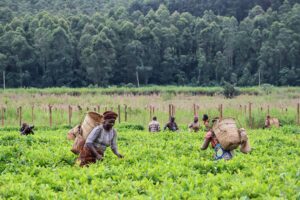
In this way of doing things, informal collectives, mutual aid networks, and emergent organising spaces are asked to formalise quickly or risk exclusion altogether. Activist-led funds are invited to navigate spaces not designed for them, with little accommodation or support. Rural women’s funding cooperatives are overlooked in favour of well-resourced NGOs with professionalised structures. Smaller, community-rooted organisations are asked to translate their work into frameworks that often strip away context and political meaning. “The margins” are not abstract; they are lived, fluid, and unevenly resourced.
There is a clear narrowing of the ecosystem, where diversity of organising approaches is discouraged in favour of what philanthropy can easily process and manage. In turn, this reinforces a cycle in which movements adapt to funding structures rather than funding structures adapting to movements. These are not accidental patterns but rather a manifestation of intersecting systems of patriarchy, capitalism, ableism, and class. And African feminists have, for a long time, noted these patterns and systems within our institutions, calling for a different way of being and doing that challenges and aims to unravel them.
African Feminist Philanthropy and Sororité
There is a well-documented and shared lineage of care-centred and collective resourcing on the continent. Practices of pooling, mutual aid, and redistribution long predate formal/institutionalised philanthropy. These practices centre accountability to community, not to implementing organisations or funding institutions. Many of these practices and their documentation have been led by African feminists within philanthropy.
Being rooted in this rich herstory invites us to see African feminist philanthropy as a political practice. A practice that enables us to enter philanthropic spaces with long memories and herstories. Those of intergenerational care practices led by grandmothers, mothers, aunties, sisters, and community networks who pool resources in times of both celebration and crisis. African feminist philanthropy holds important tools precisely because it understands resources as relational and care as collective. And holding these values is not enough. We must also practice them consistently, especially when they challenge institutional expectations or require us to redistribute power in real ways. There is discomfort in this process as it unsettles familiar ways of working. It calls on us to re-imagine our roles, our power, and how we build relationships in the movement of resources. It calls on us to practice feminist sororité.

(Feminist) Sororité lives in how we listen, how we make space for different languages and forms of expression, how we recognise both institutional and community knowledge as part of the same ecosystem, and how we embrace each other as kin in liberation. Who do we see, hear and trust? Who influences how resources move? Do our processes reinforce gatekeeping or actively dismantle it? How do we recognise and resource work that may not present itself in familiar formats but is vital?
Are we attentive to how power shapes participation? Are we paying attention to which of our kin we are in relationship with or not? Sororité requires us to resist the automatic privileging of NGO forms as the default entry point into funding. It asks us to hold space for multiple ways of organising, including those that are informal, decentralised, or intentionally resistant to institutionalisation. This is ongoing work that asks us to remain accountable in our relationships with our movements and each other across borders, even more so now.
In a moment where violence is rising, resistance is deepening, and resources are tightening, feminist sororité is necessary. It calls us to be intentional with who we fund, who we trust, and how we centre relationships in our accountability. To be honest about how power, privilege, gatekeeping, and NGO-isation are shaping our decisions. To ensure our processes enable movements to remain rooted in their politics and communities. To demand, and to practice philanthropy that is in intentional relationship with, accountable to, and led by our movements. How we relate influences how we answer these questions, how we move resources, and directly shapes the futures we are trying to build.
Translation of Quote from Eyala blog:
- Word-for-word translation of the quote in the blog: “Sisterhood means I can trust you with my life, and you’ll take care of it as if it were your own.”
- This article Author nuance: Sororité is hard to translate word for word because it means more than just sisterhood – it means being in solidarity while being in intentional kinship/siblinghood/relationship. This is why throughout the article I have used the French word instead of translating it to the English sisterhood, which is limited and not inclusive.
 Nadia is a feminist leader with expertise in philanthropy and a passion for gender and racial justice. Her work is rooted in Black African feminisms, and includes research, program and project design, strategy development, conference and workshop facilitation, and writing. In her free time, she loves writing feminist reflections, short-story fiction, and children’s stories.