Globally, hard-won rights and freedoms like sexual and reproductive health and rights, hate speech legislation that protects gender and sexual minorities, gender equality laws and the concept of gender itself, together with other progressive rights, are being challenged and rolled back. Africa, particularly, has become one of the battlegrounds for these contestations led by ultra-conservative groups and organisations identified as anti-rights organisations. These actors are considered ‘anti-rights’ not only because they contest established human rights norms, but also because they hold a different conception of rights rooted in European and religious ideas on tradition, protection and family. This is a regression of rights already hard-fought for in Africa, and it is often clothed in the language of sovereignty, African values and other seemingly neutral terms used to push harmful laws and policies that target gender minorities. These debates are fought at both domestic and international levels, and it is important to see how these actors construct narratives and use mechanisms that were created to enhance human rights protections to target those very rights.
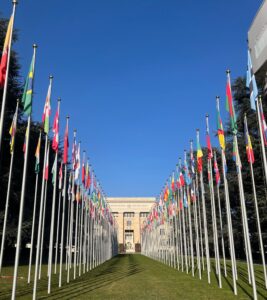
On 30 June 2026, Ordo Iuris (OI), a global Christian rights Polish-founded organisation, constituted its new African arm, Ordo Iuris Africa. It later announced that it had submitted a joint opinion to the UN Human Rights Council ahead of Uganda’s 4th cycle Universal Periodic Review (UPR), scheduled for October-November 2026. The Human Rights Council is an intergovernmental body which examines the human rights situation around the world through periodic meetings held in Geneva. The Council uses the UPR to continuously monitor the human rights situation in various countries and provide a platform for peer review amongst countries and feedback from various stakeholders, including civil society. The UPR is designed to be a mechanism through which states improve their human rights record and maintain international human rights standards.
Ordo Iuris’ choice of Uganda is not accidental, given previous and ongoing efforts to undermine the human rights of marginalised groups, best exemplified by the passing of the Anti-Homosexuality Act of 2023. The law, described as one of the harshest anti-LGBT laws globally, carries sentences of up to life imprisonment and criminalises any advocacy or medical support relating to LGBTQ+ persons. Since its passage, human rights advocates have documented more than 1,000 cases of human rights violations against individuals and organisations identified or perceived as LGBTQ+ in nature in Uganda. Some activists have suggested a link between external transnational actors like OI and the legislation, as well as Uganda’s role in establishing the African Inter-Parliamentary Conferences on Family Values and Sovereignty held in Entebbe for several years.
A month before the May 2026 submission, OI circulated a 112-question survey to government ministries, civil society organisations, and religious bodies across Africa, ostensibly to inform its report to the United Nations. It is absurd that an organisation that has previously worked primarily in Poland in the European context is attempting to use its Economic and Social Council (ECOSOC) consultative status at the UN to make policy recommendations for Uganda or any other African country. Although Ordo Iuris describes its submission as a defence of family, parental rights, child protection, religious freedom, and national sovereignty, its track record in this terrain gives us cause for pause.
In recent years, there has been a rollback of hard-won human rights protections in these areas in various African countries, including the rejection of age-appropriate comprehensive sexual education, further criminalisation of minoritised communities, and the weaponisation of “sovereignty” language to weaken civil society. A careful reading of OI’s past documented positions across these five areas suggests a pattern of selective treaty citation and normative inversion that poses an even further risk to the implementation of international human rights law in Uganda and across the African continent.
Capturing the United Nations systems from the Inside
The Human Rights Council-led UPR is one of the most important accountability mechanisms in international human rights law. The mechanism was designed to create space for civil society to hold governments accountable through independent evidence. All written submissions are published and given procedural equivalence alongside UN compilation documents. Ordo Iuris is using it for the opposite purpose. Its submission does not present evidence of human rights violations. Instead, it presents a normative counter-narrative designed to justify the legal framework under which violations are being committed. By invoking sovereignty to characterise Uganda’s treaty obligations as foreign impositions and religious freedom to shield state enforcement of doctrine on non-consenting citizens, the submission inserts a formally credentialled anti-rights argument into the Working Group’s information base.
What makes this effective is the institutional halo. United Nations ECOSOC consultative status, like OI has, does not mean UN endorsement. It is a procedural status enabling participation in UN processes. But to a government official or ordinary citizen reading UPR submissions, the distinction may not be clear, and Ordo Iuris knows this. Ordo Iuris, a Polish organisation, invokes African self-determination to defend current discriminatory legal frameworks that were introduced into Africa by colonial states. It then attacks Africa’s own mechanisms, like the Maputo Protocol and the African Commission’s resolutions, developed by African states themselves, framing them as external impositions. An external actor, Ordo Iuris, slowly takes over Africans’ self-determination agency while posturing as supportive of it.
Ordo Iuris’s Europe Track Record
Between 2019 and 2020, Ordo Iuris drafted the resolutions that led dozens of Polish municipalities to declare themselves zones free of what they called LGBT ideology. Polish administrative courts subsequently found those resolutions unlawful. When activists created the Atlas of Hate to document the zones, Ordo Iuris filed defamation proceedings against them on behalf of the municipalities it had advised. The UN Special Rapporteur on Human Rights Defenders characterised these proceedings in 2022 as an attempt to intimidate civil society through legal means.
The organisation has submitted opinions to the European Commission arguing that hate speech regulation targeting sexual orientation violates freedom of expression, a position the European Court of Human Rights had already rejected. In 2024, the Committee on Elimination of All Forms of Discrimination Against Women (CEDAW) found that the restrictive abortion laws in Poland had contributed to a range of human rights violations, including preventable deaths. In response, Ordo Iuris dismissed the report as an attempt to interfere with Poland’s sovereignty, with no meaningful engagement with the experiences of women who need abortions.
For more than a decade, Ordo Iuris has built a legal infrastructure for reframing international human rights law as ideological imposition.
Today that infrastructure is being implanted in Africa, and its methods mirror those ongoing anti-rights efforts through the African Inter-Parliamentary Conferences on Family Values and Sovereignty held so far in Ghana and Uganda.
What We Can Do
As the Human Rights Council reviews Uganda’s human rights situation, this is an opportunity to highlight the realities faced by women and other marginalised people and advocate for a more enabling environment. Civil society organisations submitting to Uganda’s UPR need to document these realities and show how implementing international human rights standards can improve women’s lives.
Further, it is important to expose Ordo Iuris’s history of misrepresenting international human rights law in submissions to the Working Group. UN treaty bodies reviewing Uganda should note in their concluding observations when state-endorsed arguments mirror the positions of an organisation with a documented history of misrepresenting international human rights law.
African lawmakers have a duty to ensure that laws they create do not violate rights enshrined in the African Charter of Human and Peoples’ Rights, the Maputo Protocol, and the African Charter on the Rights and Welfare of the Child, instruments their own states drafted and ratified. Legislation that criminalises health services and silences civil society is a breach of obligations assumed freely and for which African States remain internationally accountable.
Ordo Iuris did not come to Africa to protect African families. It came to find new terrain for a campaign it has run in Europe for over a decade. The UPR is the entry point, and Uganda is the test case. The tools to resist this are already in African hands, including surfacing distortions in courts, through advocacy and mobilisation, and using African Human Rights mechanisms. The question is whether states, civil society and activists who hold these tools will act before the damage becomes irreversible.
Nahaja Adam is a feminist lawyer and activist who works as a Countering Anti-Rights Actors (CARA) Associate Lawyer at the Initiative for Strategic Litigation in Africa (ISLA). She is based in Accra, Ghana.
Ophelia Kemigisha is a queer feminist activist, facilitator and human rights lawyer. She organises with feminists from Uganda and across the African continent to advance radical politics for the liberation of women, LGBTIQ people, and other groups affected by patriarchal violence.