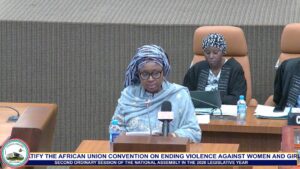
The problem with being first is that it can make movement look like progress. The Gambia has become the first African Union member state to ratify the African Union Convention on Ending Violence Against Women and Girls (AU CEVAWG), which was adopted in February, 2025. That fact will travel well. It sounds historic. It will sit neatly in speeches, campaign messages, diplomatic updates, and celebratory headlines. A small country with a heavy human rights history has stepped forward, we will be told. The Gambia has led.
But leadership is not measured by who moves first. It is measured by where that movement takes us.
For a country like The Gambia, symbolism is never neutral. This is a country that has lived through authoritarian rule, state violence, enforced disappearances, torture, sexual violence, witch-hunts, arbitrary detention, and the silencing of dissent. Since 2017, it has been trying, unevenly but visibly, to rebuild its democratic and human rights credentials. The Truth, Reconciliation and Reparations Commission gave victims and survivors a national platform to speak. The Government White Paper and implementation process, though delayed and imperfect, at least recognised that truth, reparations, prosecutions, institutional reform, and guarantees of non-recurrence matter.
The Gambia also occupies a particular place in Africa’s human rights imagination. The African Charter on Human and Peoples’ Rights is widely known as the Banjul Charter. The African Commission on Human and Peoples’ Rights sits in Banjul. For decades, The Gambia has hosted the institutional heart of the African human rights system, even when its own domestic record sat in painful contradiction with that role.
That history should make us more careful, not less.
The Gambia knows what it means for law to promise protection and fail in practice. It knows what happens when institutions are weak, when rights depend on political mood, and when the language of justice is not matched by accountability. Precisely because of this history, The Gambia’s ratification of the AU CEVAWG should not be treated as an automatic feminist victory.
Domestic instruments stronger than AU Convention
The question is not whether The Gambia should support a continental treaty to end violence against women and girls. It should. The real question is whether this Convention, in its current form, strengthens protection or lowers the standard under the cover of progress.
The Gambia is not starting from zero. Its laws already protect equality, prohibit FGM and child marriage, and address women’s rights, domestic violence, sexual offences, children’s rights, and relevant criminal offences. These laws are not perfect, and enforcement remains weak. Survivors still face stigma, pressure, delays, poor enforcement, and limited access to support. But in several respects, Gambian law is clearer than the AU CEVAWG.
FGM exposes this most sharply. Section 32A of the Women’s Act, as amended in 2015, expressly prohibits female circumcision and defines it to include female genital mutilation or cutting. The AU CEVAWG, by contrast, speaks more generally of harmful practices. That language has value, but it does not do the same work as naming FGM and requiring states to prevent, prohibit, investigate, prosecute, punish, and provide remedies for it.
This is not a technical complaint. In law, naming matters. Clarity gives survivors, lawyers, courts, communities, and institutions something firm to demand and enforce.
For The Gambia, this is urgent. Even with a clear legal ban, girls have continued to be cut, and reported infant deaths have shown the cost of weak enforcement. Some members of the National Assembly also tried to repeal the ban, and the fight over the law has now reached the courts. If girls can still be cut, and some can die, under a law that expressly prohibits FGM, what message does it send when Africa’s newest treaty on violence against women and girls fails to name it clearly?
A new African treaty should build on the gains of the Maputo Protocol and the stronger national protections already secured for women and girls. It should not lower the bar.
Weak convention threatens progress rights
The weaknesses of the AU CEVAWG go beyond FGM. Its state obligations are fragmented. Some provisions read more like policy aspirations than binding legal duties. The text does not consistently ground violence against women and girls in equality and non-discrimination, even though human rights standards have long recognised gender-based violence as rooted in unequal power relations. A strong treaty should make it clear that states must prevent, protect, investigate, prosecute, punish, provide remedies, collect data, fund services, and reform institutions. The AU CEVAWG does not carry that architecture consistently into its operative provisions.
It also names important concepts without doing enough legal work to make them enforceable. Femicide is mentioned, but without clear obligations on prevention, investigation, prosecution, punishment, data collection, or remedies for families and communities. Harmful practices are defined, but not supported by a dedicated substantive provision. Technology-related harms are reduced to “cyberspace”, as though online violence is merely a location, rather than part of a continuum of gender-based violence that moves between digital and physical life.
Some definitions are especially concerning. The Convention defines the family by reference to how each State Party defines or provides for it in national law.
That may appear harmless, but it can allow restrictive family-values frameworks to enter the treaty through domestic law and narrow rights protections. The definition of women and girls human rights defenders is also tied to nationality of a State Party. That risks weakening protection for migrant, refugee, stateless, diaspora, and transnational feminist defenders whose work often crosses borders.
At a time when anti-rights actors are increasingly organised across borders, a treaty on violence against women and girls should expand feminist protection and solidarity. It should not narrow the circle of who counts.
African feminist response to AU Convention loud and clear
This is why civil society across Africa has not been silent. Feminist movements, women’s rights organisations, legal scholars, activists, and some actors involved in earlier drafting processes have raised serious concerns about both the content of the Convention and the process through which it was developed. There are no publicly available records showing how the Convention was developed, no travaux préparatoires, and no clear account of which drafts were circulated, who reviewed them, or how expert input shaped the final text. Some stakeholders were asked for their views on what the treaty should contain, but were not given draft provisions to scrutinise.
The drafting process also appears to have been compressed.
A lengthy draft was reduced to a much shorter final text within months, while the drafting committee was reportedly reduced without a clear public explanation.
For a human rights treaty of this importance, participation cannot mean consultation in name only. It must include access to the text, time for feminist and legal review, and a transparent account of how survivor-centred, movement-led, and technical expertise shaped the final instrument.
Out of these concerns came the #PauseforPurpose campaign, which calls for a continent-wide pause in ratification so the Convention can be properly reviewed, debated, and revised before it enters into force. Its message is simple: Africa should not rush a women and girls’ rights treaty into binding law when serious legal gaps remain unresolved. A treaty adopted in the name of African women and girls should actually protect them.
Some actors have responded with a familiar argument: ratify now, fix it later. They argue that gaps in the Convention can be addressed later through general comments, interpretive guidelines, legal opinions, and litigation.
It sounds practical. It is also misleading and dangerous. Once ratified, the Convention’s text becomes the standard states are expected to implement. Later tools can help explain the text, but they cannot replace a strong treaty. And even then, their impact depends on too many uncertainties: whether treaty bodies and courts are willing to act, whether the text gives them enough to work with, whether the political climate allows it, and whether civil society has the resources to keep pushing.
Activists, feminist lawyers, survivors, and women’s rights organisations should not be left to do the political and legal repair work that the Convention itself should have done.
They have already done the work that should have shaped the treaty from the beginning: scrutinising the text, exposing its gaps, building public awareness, and warning against turning a flawed instrument into binding law.
Now that The Gambia has ratified the Convention, the responsibility shifts to the state. The government must publicly set out how it will implement the Convention without weakening existing protections for women and girls. Parliament must exercise oversight. State institutions must be guided by the stronger protections already found in Gambian law. Civil society and the public must continue to demand accountability.
Threat of anti-rights mobilisations
We are not operating in neutral times. Across Africa, women’s rights, children’s rights, sexual and reproductive health and rights, protections against harmful practices, and even the Maputo Protocol itself are increasingly targeted by conservative and anti-rights actors. Once a binding women’s rights treaty is reopened, there is no guarantee that the process will move in a progressive direction.
The stronger path is to correct the Convention before it enters into force. Treaty-making should not become a race to ratification, especially where women’s and girls’ rights are at stake. AU practice already shows that instruments can be revisited before ratification or full operationalisation, including the Protocol on the Court of Justice of the African Union, the African Convention on the Conservation of Nature and Natural Resources, and the African Maritime Transport Charter. If the AU has revisited other continental instruments, it should do so here too, where the consequences of a weak treaty are so serious.
The Gambia’s ratification also comes at a politically charged moment. The country is entering an election year.
In such a context, the ratification of a continental women’s rights treaty can easily become a convenient slogan: The Gambia leads Africa. The Gambia protects women. The Gambia made history.
But women’s rights cannot be reduced to electoral branding. Protection cannot be performed on a campaign platform while the treaty being celebrated remains weak, contested, and legally unclear.
The Gambia should not be celebrated merely for being first. It should be challenged to be principled. If ratification closes the conversation, then it will have done harm. If it reopens a serious national and continental debate about the quality of the AU CEVAWG, then The Gambia can still offer leadership of a different kind.
The Gambia can say yes to ending violence against women and girls while also saying that this Convention must be strengthened. It can stand with African civil society in demanding revision, clarity, and meaningful participation before the continent settles for a standard that falls short of the lives it claims to protect.
Being first is not enough. The real test is whether women and girls are safer because of the law. On that test, symbolism will not do. Africa deserves a treaty that is clear, enforceable, survivor-centred, and worthy of the women and girls in whose name it was adopted.
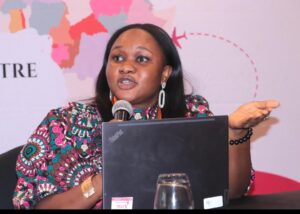 Fatou Bintou Sallah is a Gambian human rights lawyer working with the Initiative for Strategic Litigation in Africa. Her work focuses on women’s rights, regional human rights advocacy, coalition coordination, feminist legal and policy analysis, knowledge production, and engagement with African human rights mechanisms. She holds an LLB from the University of The Gambia, an LLM in Human Rights and Democratisation in Africa from the University of Pretoria and a Peace, Security and Development certificate from King’s College London.