There is something deeply important happening across Africa today.
The return of the language of Sovereignty.
After decades of externally prescribed development models, unequal trade arrangements, military dependencies, and cultural domination, Africans are once again asking profound questions: Who defines our future? Who controls our resources? Who shapes our values? Who has the authority to imagine Africa?
These are necessary questions.
Indeed, the desire for African sovereignty is one of the most important political conversations of our time. A continent cannot forever live through borrowed dreams, imported priorities, or outsourced imaginations. To seek sovereignty is not reactionary. It is the work of dignity.
But as with all powerful ideas, Sovereignty itself is vulnerable to capture. Increasingly, what should be a people’s conversation is being quickly transformed into a legislative project.
Across parts of West and East Africa, a class of politicians and legislators is beginning to behave not merely as representatives of the people, but as custodians of civilization itself. Their electoral mandates are slowly expanding into moral mandates. Their authority over legislation is mutating into authority over culture, intimacy, reproduction, and ultimately, the meaning of being African.
Perhaps we are witnessing the emergence of something new: a Parliamentocracy.
Not the rule of the people. But the rule of parliamentarians.
Its assumptions are subtle yet dangerous. Parliamentocracy presumes that electoral victory confers moral superiority. It assumes that politicians possess sufficient wisdom to define society’s values. It imagines that a handful of lawmakers can legitimately determine how millions should love, form families, raise children, or inhabit their bodies.
And increasingly, it speaks in the language of Sovereignty.
In recent years, parliamentarians from Uganda, Ghana, Senegal, Kenya and elsewhere have begun organizing around a common civilizational narrative centred on “The African Family.” Conferences, declarations, alliances, and even songs and anthems are emerging around what they describe as African culture and traditional values.
At first glance, this appears noble. Who would oppose family? Who would oppose community? Who would oppose dignity?
Yet beneath the rhetoric lies an unsettling ambiguity. What exactly is “The African Family”? Whose family? Which Africa?
The answer becomes strangely narrow.
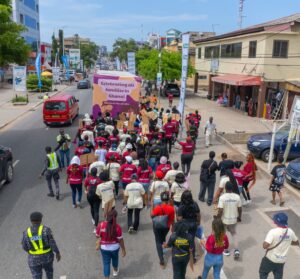
At the 4th Inter-Parliamentary Conference on Family, Sovereignty & Values (dubbed by critics as an anti-LGBT conference) held in Ghana’s Parliament, 3- 5 June 2026, organized under the leadership of Speaker Alban Bagbin, the family being defended appeared unmistakably heterosexual. It invoked communalism while excluding certain forms of human existence, such as single-parent households and women-led households. It celebrated African values while simultaneously seeking harsher legal restrictions on those who fall outside prescribed norms.
The contradictions are striking.
Bagbin himself insisted in his speech at the conference that state-sanctioned violence against vulnerable people is not the African way. And indeed, African ethical traditions have long emphasized relationality, compassion and coexistence.
So how does one reconcile that principle with laws that criminalize and punish identity and love? How does one oppose violence while endorsing conversion therapy (practices aimed at changing or suppressing a person’s sexual orientation or gender identity. Major medical and psychological organizations worldwide have found no credible scientific evidence that these practices are effective and have warned that they are associated with significant harms, including depression, trauma and increased risk of suicide.) How does this translate when it is introduced into African parliaments, Family Values bills that require a duty to report, and criminalizes advocacy and support of sexual minorities, with punishments of up to 10 years in jail (in Ghana’s case) simply for supporting the rights of vulnerable people? How does one defend dignity while seeking to deny women their bodily autonomy?
During the Conference in Ghana, members could not come to an agreement that abortion, even in cases of rape and incest, should be allowed. They also demonize sexual and reproductive Health rights and freedoms as ‘alien harmful ideologies’ and ‘agendas’, describing rights already hardworn as an attempt to remove parental protections of minors and to encourage deviant behaviour amongst minors. Repressive Evangelist Pentecostal philosophies have also been crucial in the formation of this thinking.
In Uganda, three years ago, the Anti-Homosexuality Act introduced some of the harshest legal penalties against LGBTQ persons in the world. Alongside Uganda’s harsh anti-LGBT legislation, wider conservative movements across the region have begun extending their focus beyond sexuality to reproduction itself, advocating policies that would restrict abortion rights and limit access to assisted reproductive technologies such as IVF to married heterosexual couples, excluding unmarried individuals and queer families from forming families through these means.
Meanwhile, anti-rights networks increasingly frame abortion access, feminism and sexual autonomy as foreign impositions. The irony is difficult to ignore: policies often inspired and financed by transnational conservative movements such as Family Watch International and the World Congress of Families are themselves presented as bulwarks against foreign influence. The loudest defenders of African sovereignty often borrow their intellectual frameworks from transnational conservative movements headquartered in Arizona, Washington, D.C., New York, Colorado Springs, Madrid, and Geneva.
Senegal, too, has witnessed rising campaigns demanding stricter criminalization and the defense of so-called African values against perceived moral threats. Although same-sex relations had long been criminalized under Article 319 of the Penal Code, Senegal significantly hardened its laws in March this year. The new laws double the maximum prison sentence for same-sex relations from 5 years to 10 years, increase fines and criminalizes the “promotion” or financing of homosexuality.
Until recently, Burkina Faso stood apart from many African states in that it had never inherited colonial-era sodomy laws. Yet under a military regime, and amid a continent-wide rise in family-values politics, it has now embraced criminalization. In September 2025, Burkina Faso adopted a new Personal and Family Code that criminalizes same sex relations and imposes sentences of two to five years, and criminalizes behaviour deemed to ‘promote’ homosexual practices.
The pattern is becoming clear. Sovereignty is being interpreted less as the collective freedom of peoples and more as the authority of states over bodies. But these are not the same thing.
True sovereignty should liberate. Parliamentocracy seeks to control.
True sovereignty expands democratic imagination. Parliamentocracy narrows it.
True sovereignty asks how Africans can flourish. Parliamentocracy asks how Africans can conform.
This raises another uncomfortable question. Who are political leaders? Really?
Democracy often encourages us to imagine elected officials as embodiments of popular wisdom. But politicians are human beings pursuing power within systems that reward charisma, loyalty, ambition and party interests. They are not necessarily historians or critical thinkers.
Most are products of party machinery, and many are shaped by personality cults. Almost all operate within structures where partisan interests routinely supersede national interests.
To grant such actors unchecked authority over culture itself is profoundly dangerous, especially because African societies have never possessed a single moral consensus. Africa has always been plural, communal and individual. Expressive of a variety of genders and sexual identities under different names or no labels at all. Traditional and evolving.
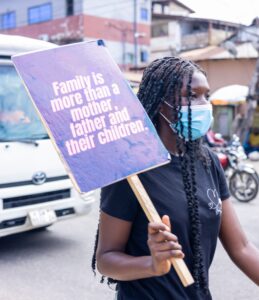
Africa has also been: Grandmothers raising children; Aunts parenting nieces and nephews; Communities sharing meals; Migration reshaping kinship.
Multiple ways of belonging have always existed. Our histories are far richer than the tidy certainties now emerging from parliamentary chambers. Which is why perhaps the greatest challenge facing African sovereignty today is not merely resisting external domination.
It is resisting internal monopolies over meaning.
Protecting sovereignty from Empire must not require us to surrender ourselves to parliamentocracy, because sovereignty belongs to the people, not to political classes.
It belongs to the living, evolving complexity of African societies, not to the temporary occupants of parliamentary seats. And perhaps that is the question Africa must urgently ask itself:
When we speak of sovereignty, are we speaking about the freedom of the people?
Or merely the authority of those who claim to speak in their name?
Feature photo by Xavier Messina
Akosua Hanson is a culture curator and activist based in Ghana.