Some really interesting food for thought. Watch the video in its entirety. And here below snippets of his thoughts:
…the issues of gender violence, sexual assault, domestic violence, relationship abuse, sexual harassment, sexual abuse of children, that whole range of issues that are referred to as gender violence issues, they’ve been seen as women’s issues that some good men help out with but I have a problem with that frame and I don’t accept it. I don’t see these as women’s issues that some good men help out with. In fact I’m going to argue that these are men’s issues, first and foremost…
Calling gender violence women’s issues is part of the problem for a number of reasons. The first is it gives men a reason not to pay attention.
what are the roles of various institutions in helping to produce abusive men? What is the role of religious belief systems, the sports culture, the pornography culture, the family structure, economics and how that intersects, and race and ethnicity and how that intersects, how does all this work? Once we start making those connections and asking those important and big questions, then we can talk about how can we be transformative…how can we change the practices? How can we change the socialization of boys and the definition of manhood that lead to these current outcomes?
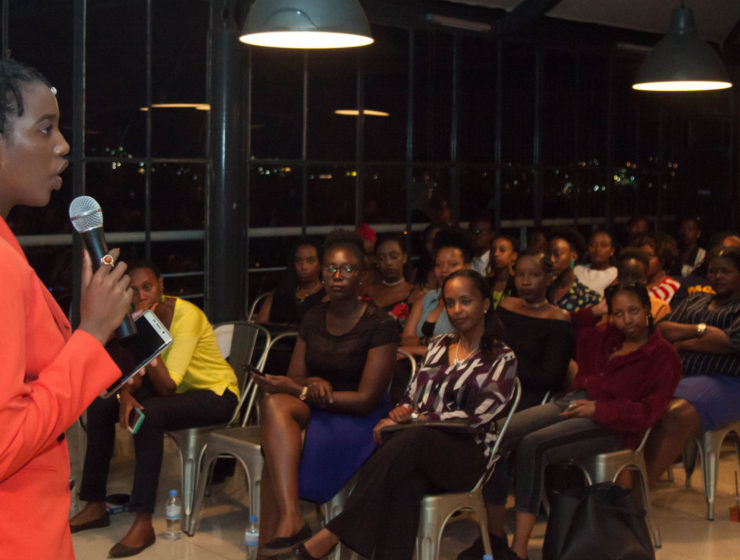
So proclaimed a sticker that used to hang on the door of my favorite professor in graduate school, and I was reminded of it when I attended a forum on men’s engagement to end violence against women a few days ago. The meeting was organized by the Network for Ethiopian Women’s Associations (NEWA) as part of its activities to mark the 16 Days of Activism against Gender Based Violence. Since 1991, the 16 Days of Activism, initiated by the Center for Women’s Global Leadership at the US-based Rutgers University have been marked between November 25 (International Day for the Elimination of Violence against Women) and December 10 (International Human Rights Day). The theme for 2011 focuses on militarism and as you might have seen reflected in banners around Addis, proclaims, ‘From Peace in the Home to Peace in the World!’ Continue Reading
African Feminists on Militarism, Conflict and Women’s Activism
Dr. Margo Okazawa-Rey
Dr. Amina Mama
“Theorizing conflict from a gender perspective very quickly leads us to the realization that for women living in patriarchal societies, all of which are characterized by a general proclivity for violence, peace and security are elusive, limited and precarious……Bringing a feminist lens to bear on the meaning of militarisation, conflict, peace and reconstruction, takes our analysis beyond ‘toys for the boys’ considerations of arms, arms expenditure, and the mobilisation and demobilisation of national armies. It enables us to tackle the broader historical and socio-cultural conditions that underpin the normalisation of institutionalised violence in our lives. Feminist analyses define militarism in terms that include values, norms and ideas, institutional cultures, and values that emanate from the military and military institutions to permeate society, and come into play in all aspects of culture and identity”~ Amina Mama and Margo Okazawa-Rey
Dr. Rangira Béa Gallimore
“The exclusion of women from the military is also linguistically reflected in Kinyarwanda, the principal language of Rwanda. The word for “male” in Kinyarwanda is “umugabo” where the radical “gab(o)” denotes masculinity. It is therefore not surprising that the Kinyarwanda word for the army is “ingabo.” This same word also signifies “shield.” Here, the emphasis is on the protective role played by the male soldier in the society.”
Yaliwe Clarke
“The prevalence of aggressive masculinities institutionalised in armies
and security structures has featured prominently in contexts where political
institutions have been displaced by militias and armies engaged in violent
conflict. In such militarised societies, violence has become a political tool to
retain power amongst the elite, and in a growing number of instances (notably
Rwanda, DRC, Liberia and Sierra Leone), mass rape and gender based violencehave been widely deployed as a military strategy to terrorise the ‘enemy’.”
Nozizwe Madlala-Routledge
“Feminist scholars have begun to analyze the intersection of militarism and
patriarchy and the impact they have on gender roles. They are discovering
that merely becoming involved in a military force does not automatically
liberate women from exploitative relationships. Rather, women who choose
to join military forces have to combat both the external enemy and the
patriarchal attitudes and actions within the military force itself. Whereas it was
believed that the incorporation of women into the military would transform
gender relations and roles and free women from patriarchy, the reality is
that militarism serves to reinforce and reproduce unequal gender relations.”
Source: Africa Gender Institute, University of Capetown
Last Saturday night i was invited to join a friend to a house party of sorts. My expectation was a small dinner party with a few people, and so i was surprised to walk into an all out shindig with familiar faces of the town. Upon entering i was caught off guard by two young girls no more than 19 years of age sporting tight-fitting and flesh baring outfits with wing like paraphernalia on their backs, begging the question if this was a Halloween party. Yet the resemblance was something more towards play mates at Hugh Hefner’s Play Boy mansion. Flash, money and alcohol was the scent in the air and as the night gradually wore away and the alcohol took its toll, women in their early twenties, scantily clad and sexually gyrating and lip-syncing to US hip-hop music, began to decay with the night. I don’t necessarily consider myself a conservative of sorts; leaning more towards liberalism, the power of choice and letting people be who they want to be, yet I spent an uncomfortable evening witnessing a common story of sex, money and power unfold right before my eyes and i could not help but wonder if these women and men were not mere prisoners of a dis-empowering lifestyle sold by media outlets.
What is media telling us?
Much has been said globally about the role of media in its representation of women and men thereby influencing thoughts and actions of those who consume its products. Ethiopia is no exception. Watch a local music video or film, flip through a magazine, observe the numerous billboards scattered across town and watch the local tv ads. The positioning is the same – women are either depicted as home makers and narcissists obsessed with physical preservation, or they are portrayed as accessories to men, most often sexualized and objectified.
The men on the other hand are depicted in positions of authority, the decision makers, the materially, economically empowered and the female magnets. These images and messages send a signal to women and girls in the country that time spent in enhancing physical attributes is a time well spent beyond cultivating their true potential. Similarly, men are pressured to forge a certain lifestyle in garnering social acceptance. Boys grow into men with the message that women and girls are accessories and their sexual objectification and control is tantamount to a true model of masculinity.
Media does indeed create consciousness and if we are exposing a generation of boys and girls to productions that are grounded only in profits and not in the responsibility of their messages, we are endorsing the decay of our society in how the two sexes continue to relate to one another. Look at the following music videos by local artists for example on how women and men are portrayed in them.
Objectification of Women’s bodies
Hawariat Petros in an interesting study titled “The Portrayal of Women in Billboard Advertisements: The Case of Addis Ababa” interviews a local graphic designer who is pressured by a client’s demand in facilitating the misrepresentation. The designer comments as follows:
"Once I was asked to design an ad for a bar. I asked my
customer (bar owner) what kind of information and
images/pictures he wanted to be included in the ad. Obviously
the name of the bar and the address will be there. Also some
pictures of alcoholic drinks will be there. We agreed on these
points but soon I was arguing with the customer. He wanted a
picture of a woman who is naked above the waist in the ad. I
tried to explain to him that it was wrong to use women like
that. But in the end, since my job is to design whatever our
customers asked, I included a picture of a woman
wearing only a bra. With our culture it’s unthinkable to have a
picture of a naked Ethiopian woman on ads so, whenever we
are faced with this kind of situation, we scan from magazines
pictures of suggestively clad non-Ethiopian women to put in the
ads […]]The customer was mad when he saw the ad. He asked
why the woman was wearing a bra. He told me he specifically
asked for a naked woman. After I explained to him I was not
able to get the kind of picture, he told me to enlarge the current
picture. In the end the picture of the bra-wearing woman
dominated the ad so much she almost covered the name of the
bar and the products (alcohol drinks) being advertised"
The sexual objectification of women and girls bodies is another form of Violence Against Women and a tool that facilitates various forms of violence to be directed towards women and girls.
What can we do?
We are at a time where even in the West gender-ed messages that the media is sending out is being questioned and the concept of responsible communication taking root. So if media outlets here are already mimicking styles of communication prevalent in the rest of the world, they might as well start becoming versed with the backlash that is occurring with gender representations in mainstream media. Watch here a powerful trailer of an upcoming documentary on media representation of women in the US, which questions the messages that are being transmitted to a young generation.
How can we expect to create a generation with the intellectual capacity to move our society above the trappings of violence and poverty if those in the privileged position of influencing people through their media prowess are feeding us images that are degrading to women and girls and pressuring men and boys?
I find it incredibly worrisome that my three-year old niece is obsessed with lip gloss, lip stick and nail polish and that her choice of music at this age is Rihanna’s “What’s my name.”
So you’re a feminist woman or you’re not. But you care about “women’s rights, equality and empowerment”. Yet have you looked into your thoughts, words and actions that are sometimes oppressive to other women? A recent experience of female on female oppression made me question and reflect upon the various ways we as women become obstacles to the success and growth of other women and girls. In a heartfelt discussion with my older brother, he pointedly remarked that it must be much more painful when the hate is channelled and women’s progress sabotaged by other women. He was correct. It was painful and hard to swallow indeed.
Even beyond the master plans of sabotage, the slightest and subtlest remarks and actions corrode the spirit of sisterhood. The haste to define and label HER looks, actions, mannerisms, and development when it is contrary to ours is detrimental not only on a women’s movement level, but on a much more deeper and personal level because that criticism or attack is either a manifestation of an unmet need or a feeling of threat to one’s own self-esteem. Yet why is one’s self-esteem tied to another’s success or failure? Especially given that we all are unique beings and excel in our different ways, making impact in our own special paths. If we think creatively, more slices can come out of that pie and we might even be able to share each other’s fork.
To understand our own value and worth as unique women in this world is to embrace the fullness of who we are as individuals. Instead of expending energy in the oppression and character assassination of another woman, a worthwhile venture would be to dedicate time to reflect upon what our authentic place in this world is and use that knowledge to contribute towards greatness. The expression of hating on or trying to bring down another woman is simply the internalization of patriarchal misogyny, where in our imagined process of deconstructing patriarchy, we are effectively acting as its vehicle every time we drag another woman down.
There are enough sayings and quotes that diminish the capacity of female connections without us becoming the agents that tarnish our own solidarity. So next time you hear the saying “set sibeza gomen teneza” (too many women spoil the cabbage) and you laugh along, take a moment and think about what your agreement means to women’s circle building. The climb towards equality with men should not be at the expense of unleashing an avalanche for those women climbing right behind you. Our individual journeys and step ups pave the way for all of us to rise up together.
I invite all of you phenomenal women reading this to create a supportive circle of sisterhood and encourage others to do the same. That circle of sisterhood need not remain exclusive but grow and include for there are many stories to share, to write, to create and to realize. When you see a woman who has what you secretly desire, choose to be inspired by rather than threatened by her. Celebrate her!
To all those women in my life and in my sisterhood circle supporting and sharing my experience of growth and whose growth I love to support, thank you for your divine feminine energy!