Ghana holds a key symbolic and political role in Pan-African unity and liberation. From the historic African unity conferences of the 1950s and 1960s to its continued symbolic weight in global Black consciousness, Ghana has stood as a reminder that Africa can define itself on its own terms. So it is fitting that Ghana now reclaims the Pan-African mantle on this International Day of Remembrance of the Victims of Slavery and the Transatlantic Slave Trade, as it presents a resolution to the United Nations General Assembly (UNGA) on 25 March to formally declare the transatlantic slave trade as the gravest crime against humanity, and to demand reparations and justice rooted in historical truth. The call is backed by the African Union, the Caribbean Community (Caricom), and a growing coalition of countries across the Global South.
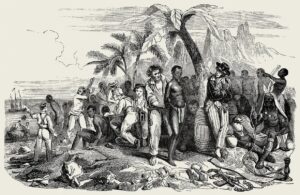
An estimated 13 – 15 million Africans, including children, were violently seized from their homelands, shackled on European and American ships, and trafficked across the Atlantic Ocean for over four centuries between 1500 and 1800. Stripped of their freedom, they were subjected to unimaginable abuse and condemned to lives of enslavement and exploitation by European countries, permanently severed from their families, their ancestors, and their cultures. This mass displacement did not simply relocate millions of people — it tore apart the very roots of their existence, erasing connections to homeland, heritage, and belonging. Legal and political systems were deliberately constructed to codify racial hierarchy, making slavery permanent and hereditary through race-based ideologies that enforced the subordination of Black people for decades beyond the formal abolition of slavery. Devastated African societies left behind suffered massive depopulation, political and economic collapse, and the dismantling of indigenous social structures and relations, setting in motion cycles of instability and inter-communal conflicts whose effects have endured to this day.
This call to formally declare the transatlantic slave trade as the gravest crime against humanity matters forces the world to confront the enduring legacies of slavery, not as a closed chapter, but as an ongoing structure of inequality layered on the violent architectures that built the modern world. A world that continues to benefit from the dispossession, exploitation and dehumanisation of Africa’s peoples. It demand reparative justice and insists that Africa and its diaspora are owed more than symbolic acknowledgement. This is a long overdue, profoundly decolonial act through the insistence on naming harm from the perspective of those who endured it, seeking tailored justice for that harm, and insisting that history must not be diluted for the comfort of those who have benefited from it.
What then doesn’t make sense is Ghana hosting an Anti-Gender conference after this monumental Pan-African gesture.
On 27-30 May, Ghana is set to host African parliamentarians for a conference driven and funded by Christian white right-wing fundamentalist actors under the guise of “family values”. This conference is part of a coordinated and well-funded movement seeking to roll back hard-won rights across Africa. Using religious tenets, the fundamentalist actors have managed to capture narratives on family and African-ness and seek to redefine who belongs, who is included and thus protected, and ultimately, who is allowed to exist with dignity.
Across the continent, we are witnessing a resurgence of organised actions that, under the banner of “family or African values”, seek to codify hate and discrimination into law and policy, building on colonial laws that are still upheld in many parts of the continent. They target women’s autonomy, restrict reproductive rights, and criminalise diverse sexual and gender identities. They are often supported by well-funded networks with roots in the Global North, exporting conservative ideologies, building on those planted by colonialism to quicken Africa’s exploitation, which then African leaders today rebrand and reframe as African resistance to Western neocolonialism. In the name of resisting imperialism, we are importing new forms of ideological control.
This Anti-Gender Conference does not represent a return to “African values”, especially considering who is driving it. Instead, it represents the resurgence of colonial and racist logics.
Domination and colonialism in Africa fundamentally reshaped social relations, particularly along gender lines, which were then enforced through colonial religion and laws, leaving once harmonious societies extremely fragile, chained to eurocentric violent norms and susceptible to manipulation and fracture. Many pre-colonial African societies had fluid, complex and more egalitarian understandings of gender, gender roles and identities. Women held political, economic and spiritual authority in ways that defy today’s upheld colonial imposed rigid gender norms.
Despite extensive African scholarship dedicated to revealing and educating on how European colonialism dismantled gender relations and destabilised our societies, many Africans and most of our leaders in searching for an escape from neocolonialism cling onto the master’s tools—reproducing discrimination and deepening chasms along the lines of difference.
Afro-feminist scholars and activists have done this heavy work of decolonial thought, memory and archiving. They continuously demonstrate how colonialism, reinforced by missionary Christianity, reconfigured gender in Africa, imposing Eurocentric binaries and hierarchies, which, unfortunately, continue to shape contemporary inequalities. Colonial rule systematically eroded pre-colonial systems and superimposed patriarchal structures that confined women to the private sphere, devalued their labour and policed their bodies. Imposed religions engrained systems of control that reinforced patriarchy, erased indigenous knowledge systems, and rigidly defined gender roles.
Take, for example, the Kenyan colonial Kipande System (identification) that was used to track male labour and therefore required boys above the age of 16 to wear a metal containers around their necks holding identity papers. This laid the foundation for the identity registration practices in Kenya today. Women were subsequently added onto the system several years later, primarily as relatives of men, moving from their father’s to their husband’s files upon marriage. This administrative practice contributes to the difficulty Kenyan women currently experience in passing on their nationality to their children and husbands, despite the 2010 Constitution enabling them to do so.
Across the continent, there is an upsurge in legislation and rhetoric that seeks to police bodies, restrict freedoms and erase identities—all under the guise of protecting “African culture”. But whose culture is being protected? African societies have never been monolithic. Even today, various ethnicities and nations have practices, rituals, and norms that are distinct from one another.
Modern discriminatory practices against women and sexual and gender minorities are often justified in the name of a singular African culture. However, what is presented as culture is frequently a colonial religious-based construction, repackaged as authentic African tradition. The policing of sexuality, the rigid enforcement of gender roles, and the marginalisation of those who exist outside heteronormative frameworks are not inherent African culture or values, they are the residue of colonial governance and Christian missionary discipline over African bodies and ways of being.
Afro-feminists remind us that any meaningful project of African liberation must include the dismantling of patriarchy as a colonial legacy—not its preservation as culture.
Decolonisation is not merely about removing colonial administrations or reclaiming political sovereignty, it is also about dismantling the epistemologies, value systems and hierarchies that colonialism embedded into our societies. It is about freeing not only the land, but also the mind and, most importantly, the body.
Decolonisation demands that we interrogate not only external systems of domination, but also the internalised hierarchies that shape our societies today. It requires us to question whose voices are heard, whose histories are told, and whose bodies are protected. It calls on us to imagine an Africa where justice is not selective but expansive, and where freedom is not conditional, but universal.
Afro-feminists assert that decolonisation cannot happen if we continue to rely on colonial logics and frameworks to define what’s African while sidelining the knowledge African scholarship and researchers have put before us for generations. Africanness isn’t some party one is invited into or has a door shut in their face; Africanness is born into, and it is our inalienable right to belong. We can only truly decolonise once we locate colonial harm in all its forms, how we carry it out on ourselves today, face it and reject it.
True decolonisation is not selective memory. It is a radical commitment to justice in all its forms. What does it mean, then, for Ghana to call for historical truth, justice and accountability at the UN while hosting a platform that perpetuates historical distortions at home? What does justice look like if it only addresses past atrocities, but lends voice and vote to present injustices? Can a nation truly claim a Pan-African stance while enabling systems that continue to perpetuate the marginalisation and exclusion of its own people? Can Ghana overlook the role that religion has played, and continues to play, in entrenching injustice and domination?
We cannot seek partial justice and call it liberation.
Yes, let’s push the perpetrators of the gravest crime against humanity and name the harms that the transatlantic slave trade left on us, the people; let us take back the right to memory and deconstruct this crime’s impact on our ways of being and the persisting legacies that still rip apart the lives of Africans today.
Liberation cannot be fragmented. It cannot prioritise race over gender or history over current lived realities. We cannot demand truth about the past while obscuring the legacy of these injustices in the present, which is a colonial continuity. We cannot claim to honour the dignity of Africa’s peoples while simultaneously invisibilising and marginalising so many among us. The same foreign structures that enslaved us and fostered dehumanisation, control over bodies and denial of agency, are echoed in the ways women and queer Africans continue to be treated today. To ignore this continuity is to misunderstand the very nature of oppression endured.
Feature photo by Amelia Opie – The Black Man’s Lament, 1826, Public Domain.
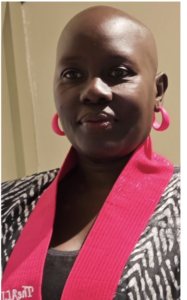 Achieng Akena is a human rights and democracy practitioner from Kenya with extensive experience in varied regions and contexts, and on issues like human mobility, gender and the rights of marginalised and underrepresented communities. She has previously worked within both United Nations and African Union peacekeeping missions, and has engaged extensively with Africa’s regional system. She holds a Master of Studies in International Human Rights Law.