There is a quiet kind of violence that states are particularly good at. It does not arrive with spectacle. It comes through paperwork. Through silence. Through the slow, bureaucratic unmaking of a life. In 2018, that violence found Animu Athiei, who was at the time a speech writer in the office of then First Vice President Taban Deng Gai, when her nationality was arbitrarily revoked by the South Sudan Directorate of Nationality, Passport and Immigration (DNPI). There was no due process. No substantiated evidence. Just a claim that she was not who she said she was. That she did not belong. And with that, the state did what it has always done, especially to women who step into power: it erased her.
African feminists have long argued that contemporary citizenship is not simply legal; it is colonial, political, contested, and deeply gendered. In works like Beyond the Masks: Race, Gender and Subjectivity , Prof. Amina Mama interrogates how African states remain structured by patriarchal power, where citizenship is not neutral but deeply political. Similarly, Prof. Sylvia Tamale in Decolonization and Afro-Feminism, pushes us to understand how law and identity in Africa remain entangled with colonial legacies that regulate bodies, belonging, and legitimacy. Within this framework, citizenship becomes a tool not just for inclusion but also for control.
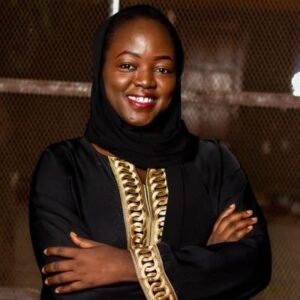 Animu was born in 1983 to South Sudanese parents from Morobo County, now Central Equatorial State. When civil war broke out a few months later, her family fled to neighbouring Uganda, where she lived until she returned to South Sudan in 2012. According to court documents, in 2014, she was legally granted her South Sudanese nationality endorsement by her uncle, Ofeni Ngota Amitai, who stood in for her father, who died when Animu was 13 years old.
Post-independence states inherited colonial systems that turned belonging into something to be documented, verified, and, when necessary, withdrawn. Within these systems, women have remained particularly vulnerable. Across most of Africa, nationality has often been mediated through patriarchy – through fathers, husbands, and lineage. Even where laws have changed, practice has not fully followed. Women are still asked, in subtle and overt ways, to prove their belonging. Today, there are still countries that deny or make it difficult for a mother to pass on citizenship to her children on an equal basis with men.
Animu’s case sits squarely within this history. The speed and ease with which her nationality was questioned reflects a deeper logic: that women’s claims to identity and authority are fragile and can be undone.
Making Women in Power Disposable
After four years, following the controversial loss of her citizenship and her job, President Salavar Kiir appointed her as a Member of Parliament in May 2021. However, ten days later, her appointment was revoked following a public outcry. Later that year, she was detained in December 2021. After failed attempts to deport her to Uganda, she was released on bail in January 2022.
Animu is not only a citizen. She is a political actor, a woman in parliament in a context where power remains deeply masculinised and militarised. And that matters because across the continent, women in politics are not just underrepresented, they are systematically undermined. Their legitimacy is constantly contested. Their presence is treated as conditional. To strip Animu of her nationality was not just administrative. It was political. It removed her from parliament. It silenced her voice. It reasserted control over who gets to occupy space. This is how patriarchal power operates, not always through exclusion, but through targeted removal. Through making examples of women who disrupt the order.
 Statelessness is often discussed in legal language conventions, rulings, and compliance. But African feminisms ask a different question: what does this mean in everyday life? It means living without certainty. Without protection. Without the ability to move freely, work securely, or exist without fear. Animu describes it as a life shaped by fear, humiliation, and the constant ache of not belonging. This is not abstract. It is alive. Statelessness, in this sense, is structural violence.
And it is not experienced equally. Women, particularly those without institutional protection, often carry its heaviest burdens. In Animu’s case, statelessness is also political punishment. A stripping not just of nationality, but of voice and visibility.
Limits of Accountability by African Institutions
In August 2024, the African Commission on Human and Peoples’ Rights ruled that South Sudan had violated Animu’s rights. It called for the restoration of her nationality, her documentation, and her dignity. But the ruling remains unimplemented.
This is where the case widens. Because what is exposed is not only state abuse but institutional limitation. The African human rights system carries moral weight, but limited enforcement power. Its decisions depend on political will. And where that will is absent, justice stalls. This gap matters. Because it reveals how rights can exist on paper while remaining inaccessible in practice for millions of Africans, especially for women navigating political systems that do not protect them.
Nationality as a Tool of Control
Animu’s case is not isolated. Across Africa, nationality is increasingly used as a political instrument, questioned, withheld, or revoked in moments of tension or dissent. In 2018, Tanzanian Authorities questioned Anudo Ochieng Onudo’s citizenship, confiscated his passport and declared him non-citizen without due process. Despite Onudo having lived his entire life as a citizen of Tanzania, where he was born and held a birth certificate and a passport, authorities deemed him a non-citizen.
This is about power. Who gets to belong? Who decides? And who is most easily excluded? Women, particularly those in public life, often sit at the centre of these decisions because their presence challenges established hierarchies. And in many contexts, that challenge is punished.
What matters now is not only the injustice, but the response. Civil society organisations have named what is happening. They have insisted that nationality is a right, not a privilege. But African feminist practice asks for more than recognition. It asks for refusal. Refusal to normalise this violence. Refusal to reduce it to legal language. Refusal to let it disappear. It insists on telling the story not as an isolated case, but as part of a broader pattern of gendered exclusion and state control.
A Politics of Belonging
At its core, Animu Athiei’s case is about belonging. Who gets to claim it? Who gets to deny it? Who gets to live without having to prove it? We need to imagine something different: a politics of belonging rooted not in control, but in dignity. Not in exclusion, but in recognition. Until then, Animu’s case remains unresolved not only legally but politically.
The question it raises is larger than one woman or one country. What does it mean to belong in a system that can so easily decide you do not exist? And what will it take to change that?
 Jedi is a South African multimedia journalist, editor and communications strategist with over two decades of experience across Africa. Her work spans conflict reporting, gender and human rights, and narrative storytelling. She is the author of Soweto to Beirut (2021), currently developing my manuscript, Lost in Transition – Apartheid Then, Apartheid Now?
Thank you for this article. Salva Kiir will bring South Sudan to it’s ultimate fall as a nation, women & children will be the first to have their humanity stripped from them, as it’s already been happening for decades. Animu Athiei is an admirable woman, me and plenty of other South Sudanese girls back her. Justice to her